
News
Learn more industry news
NEWS CENTer
Krypton Gas: What It’s Used For and Why It Costs So...
Krypton is a noble gas pulled out of cryogenic air separation in very small volumes, present in air at about 1.1 ppm. Most of it ends up in lighting, insulating glass units, lasers, gas-insulated switchgear and superconducting magnet cooling. It costs several times what argon costs because there is almost none of it to recover. The same column t...
View More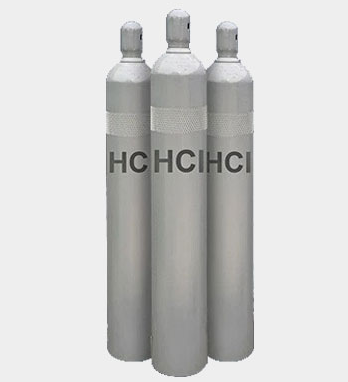
Hydrogen Chloride (HCl): Semiconductor Etching and Indust...
Anhydrous hydrogen chloride (HCl) is a colorless, suffocating, strongly corrosive and toxic gas — CAS 7647-01-0, UN1050 — supplied at 99.9%–99.999% purity for two broad roles: high-purity cleaning and etch applications in semiconductor manufacturing, and industrial chemistry such as PVC and chloro-chemistry, hydrochloric acid production, water t...
View More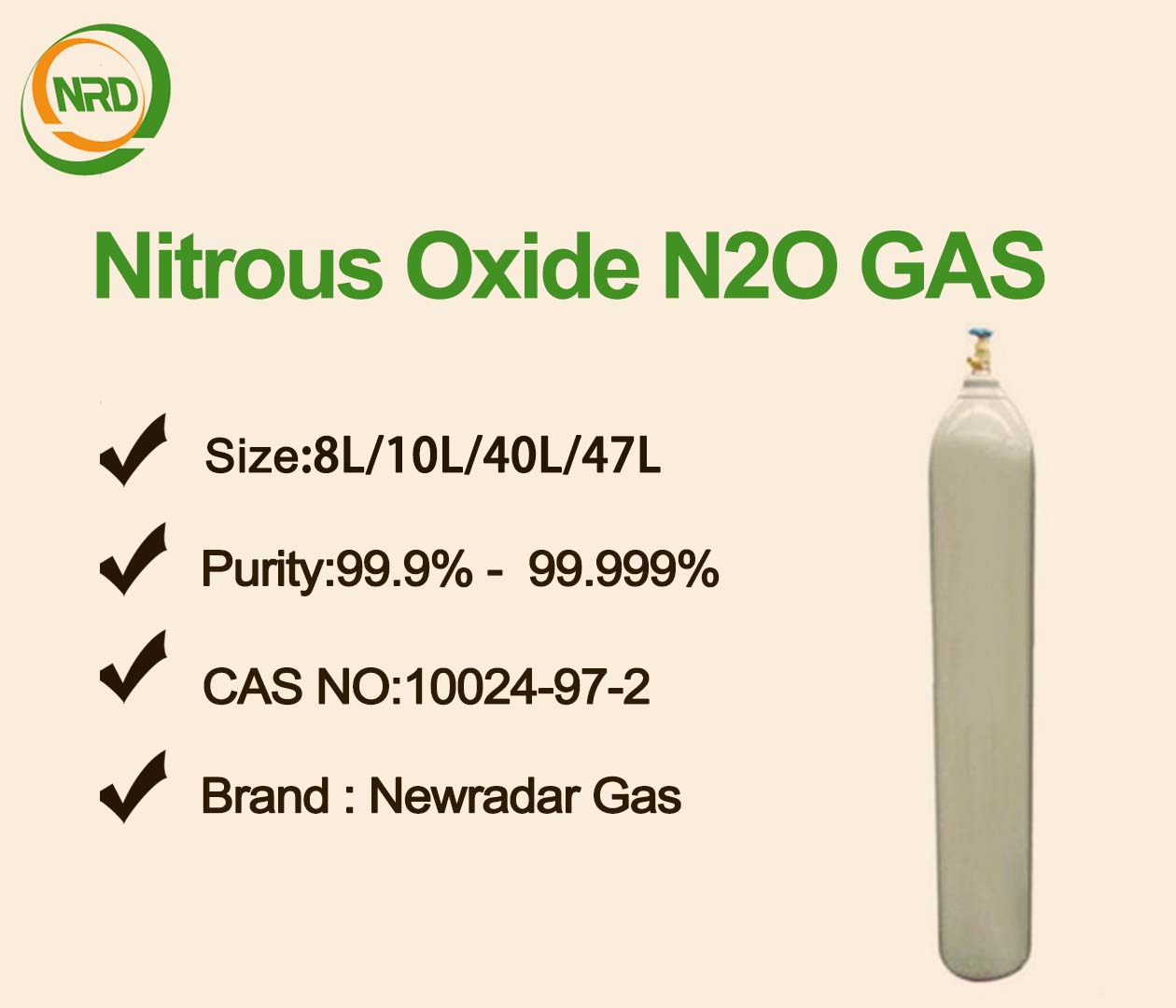
Nitrous Oxide (N2O): Medical, Food-Grade and Semiconducto...
Nitrous oxide (N2O, “laughing gas”) is a colorless, slightly sweet, oxidizing liquefied gas — CAS 10024-97-2, UN1070 — with three very different, tightly regulated roles: medical anesthesia and analgesia delivered only by licensed healthcare institutions; food-aerosol propellant use as additive E942 where the importing country’...
View More
Neon Gas Price in 2026: Semiconductor Demand and Smart Bu...
China and India spot prices for neon stood near USD 12.23/m³ in June 2026, and the market held firm through Q2’26 on global semiconductor demand, according to Procurement Resource. Neon has effectively become a semiconductor-cycle gas: deep-ultraviolet (DUV) lithography consumes it as the buffer gas inside KrF and ArF excimer lasers, so wa...
View More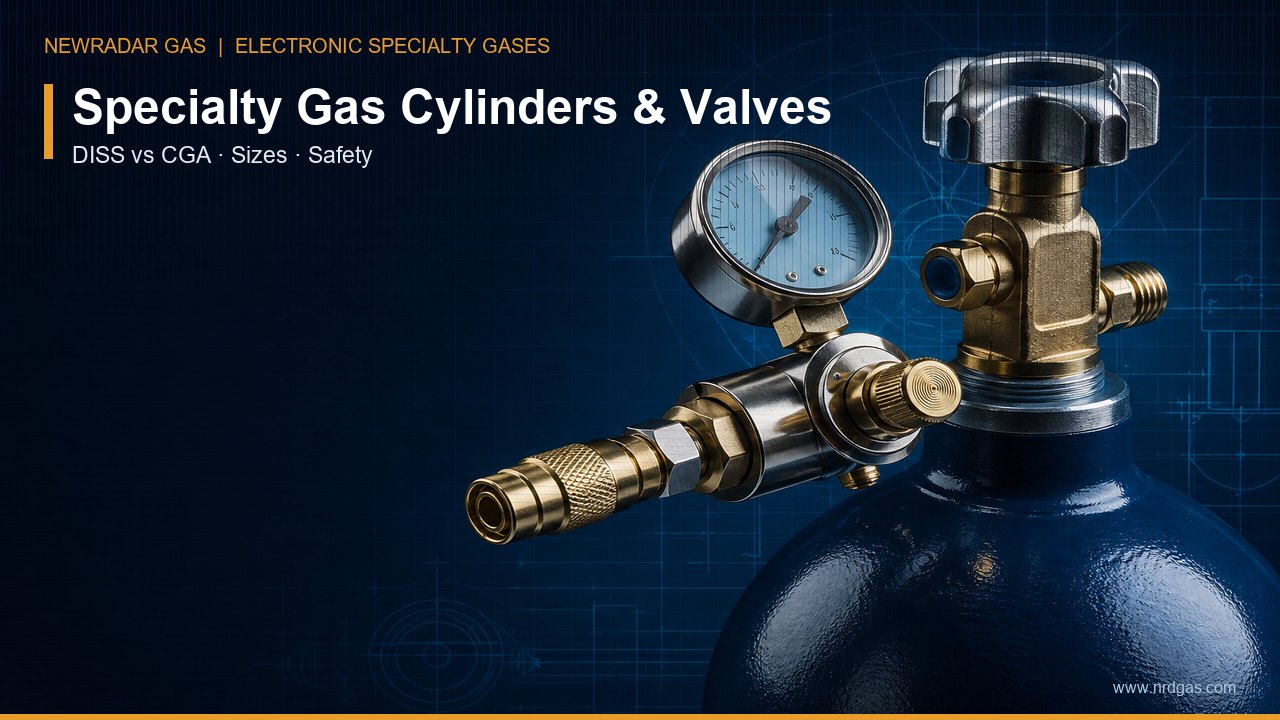
Specialty Gas Cylinders & Valves Explained: DISS vs ...
The cylinder and the valve are a matched pair: the cylinder’s water capacity and service pressure set how much gas you can hold – from standard 47L cylinders and Y-440L cylinders up to 440L-1250L bundles – while the valve outlet decides which gas line the cylinder can safely connect to. DISS (Diameter Index Safety System) is th...
View More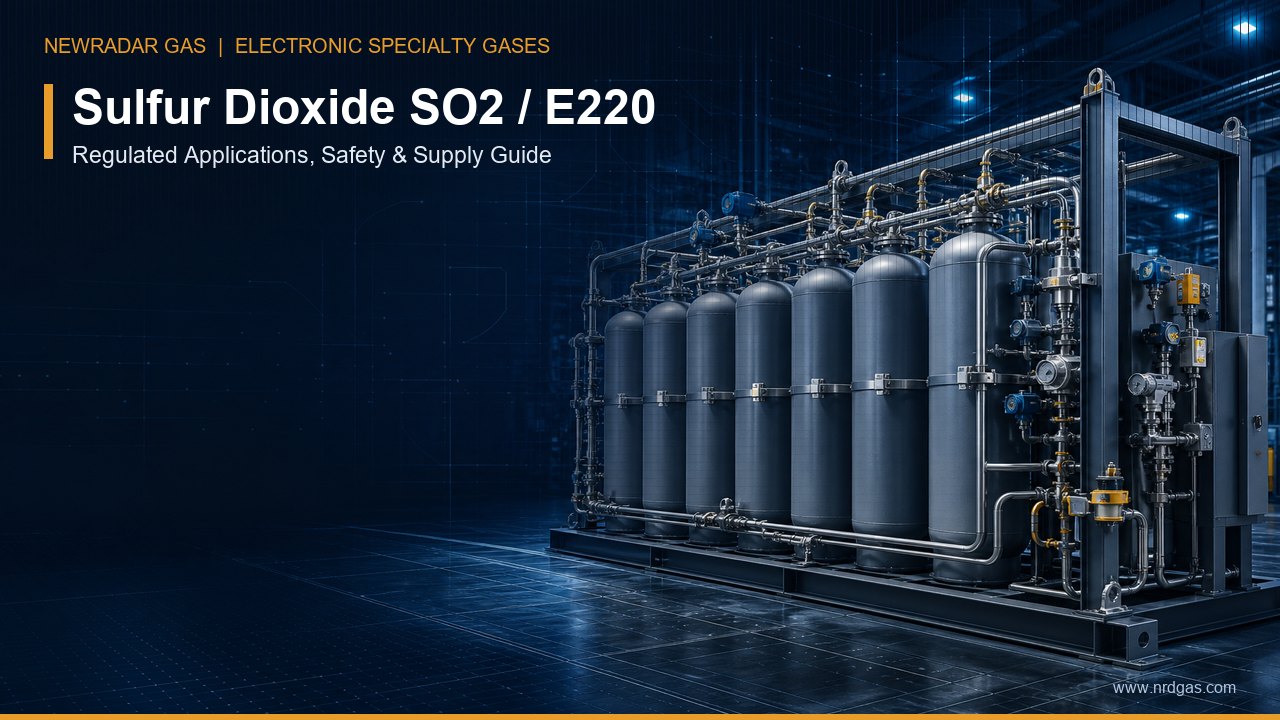
Sulfur Dioxide (SO2 / E220): Applications, Safety and Sup...
Sulfur dioxide (SO2) is a colorless, pungent, poisonous gas — CAS 7446-09-5, UN1079 — that is easily liquefied and serves two very different, strictly regulated roles: food and beverage preservation as additive E220 where national rules permit it, and industrial chemistry such as sulfuric acid production, pulp bleaching, water treatment and meta...
View More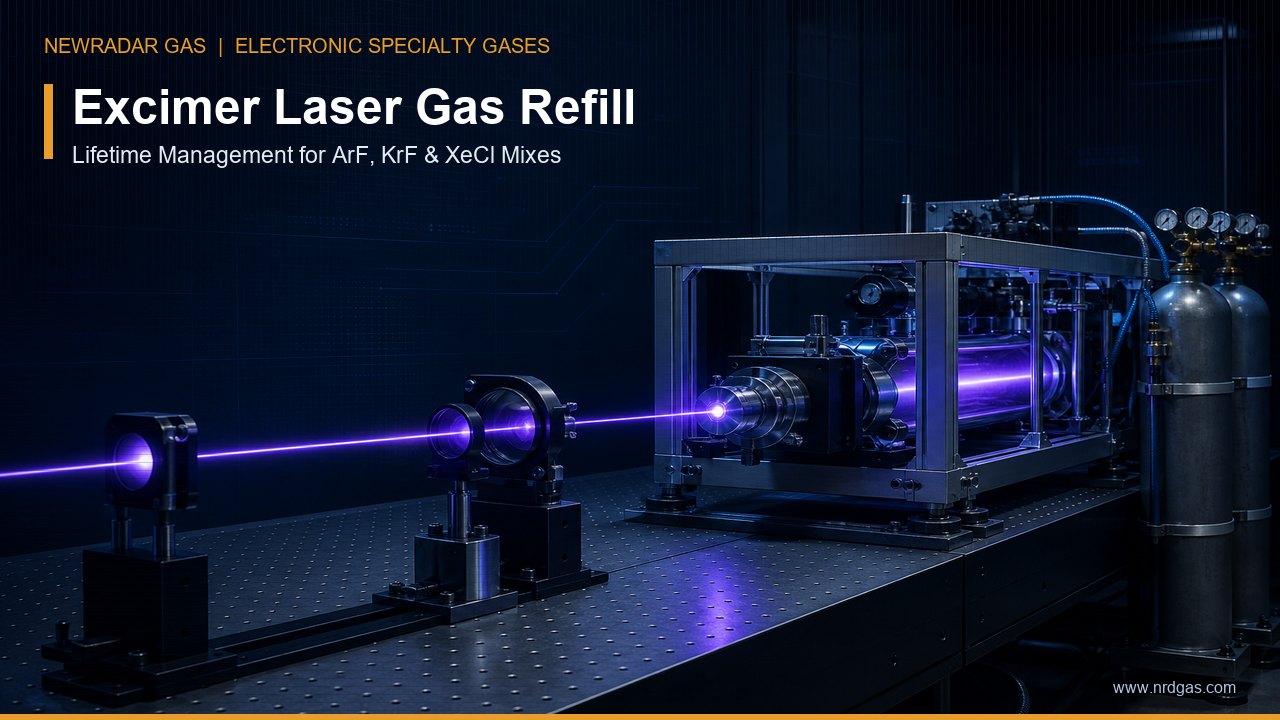
Excimer Laser Gas Refill & Lifetime Management: Opti...
An excimer laser “gas refill” is not a top-up of a tank — it is a precision halogen-containing mixture (ArF 193 nm, KrF 248 nm, XeCl 308 nm, XeF 450–520 nm) that expires when the halogen donor is consumed and impurities accumulate — long before the cylinder is empty. So lifetime management matters as much as the refill: track pulse e...
View More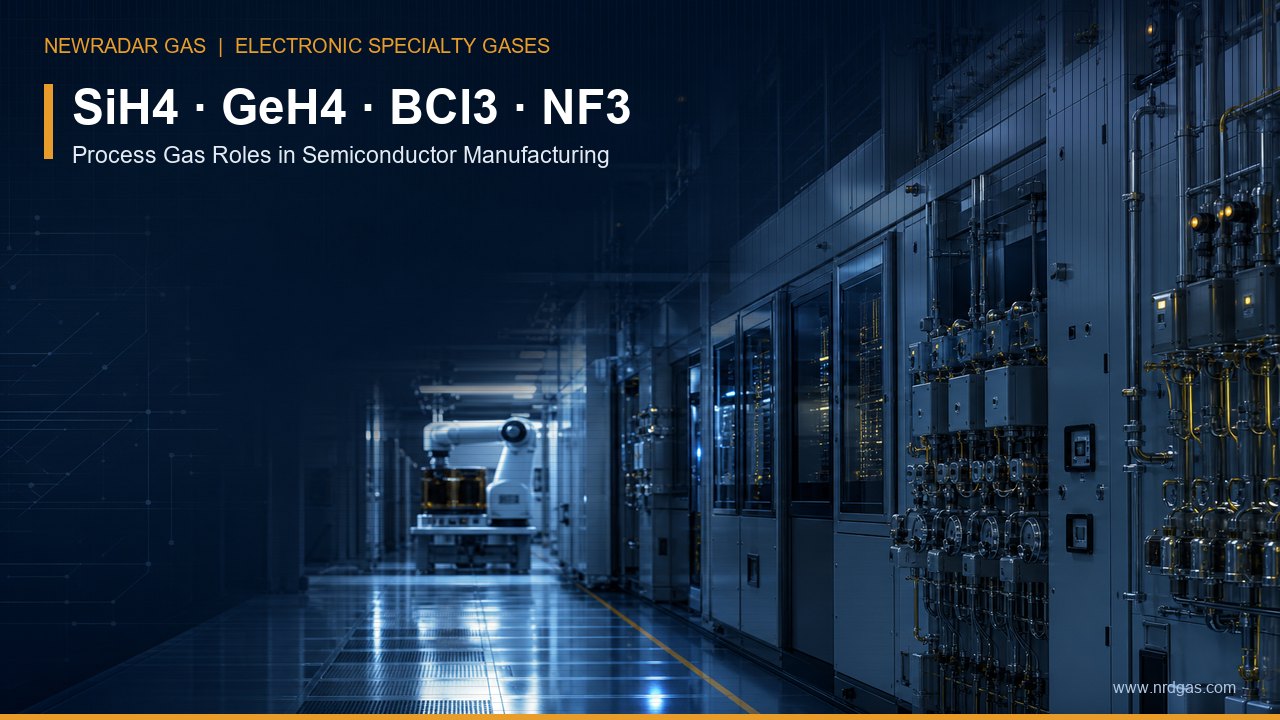
SiH4, GeH4, BCl3 and NF3: What Each Process Gas Does in S...
In semiconductor manufacturing, silane (SiH4) and germane (GeH4) are the deposition gases that grow silicon and silicon-germanium layers, while boron trichloride (BCl3) and nitrogen trifluoride (NF3) dominate the etch and clean side – BCl3 for aluminum metal etch and boron doping, NF3 for in-situ CVD chamber cleaning, etch, and flat-panel-...
View More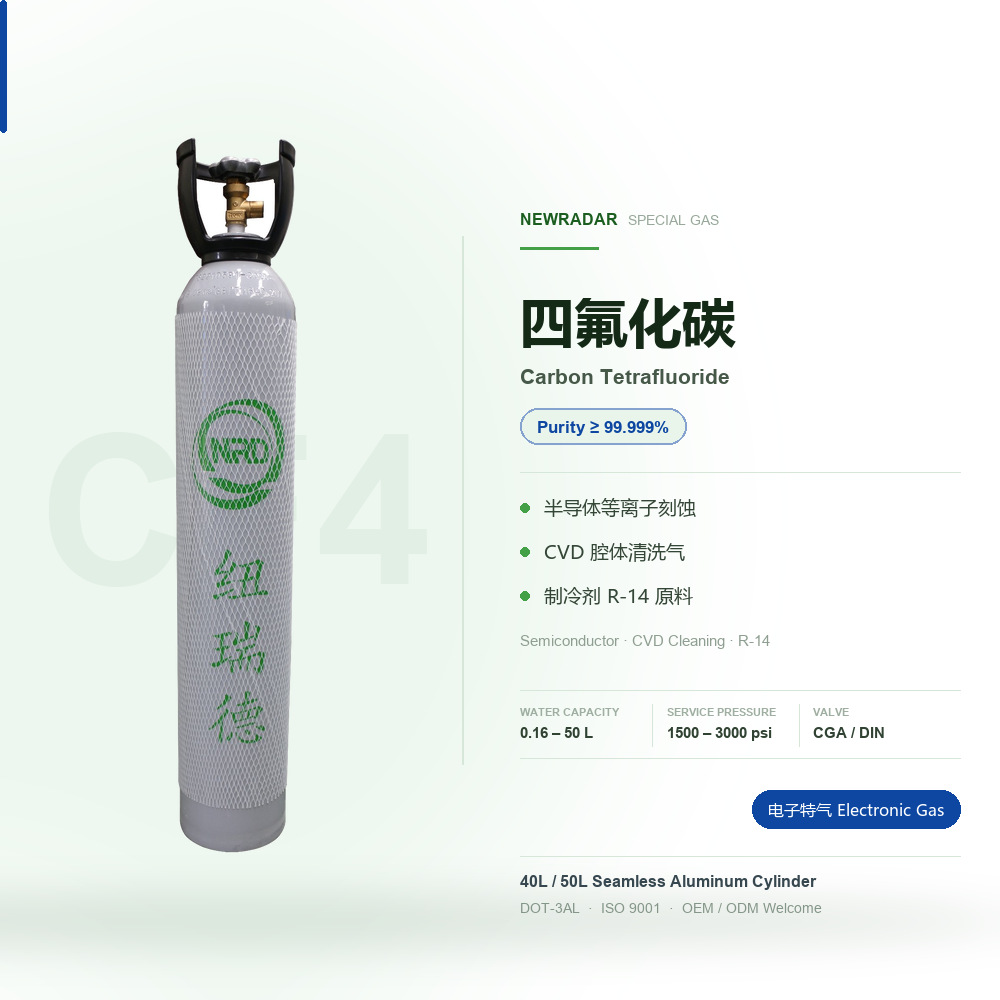
CF4 vs C2F6 vs C4F8 vs CHF3: Choosing the Right Semicondu...
For dielectric plasma etching, the gas choice usually comes down to four fluorocarbons: CF₄ (carbon tetrafluoride, R-14) as the general-purpose oxide and dielectric etch gas, C₂F₆ (hexafluoroethane, R-116) for dielectric etch and chamber-cleaning duties, C₄F₈ (octafluorocyclobutane) for high-aspect-ratio contacts and trenches such as those in 3D...
View More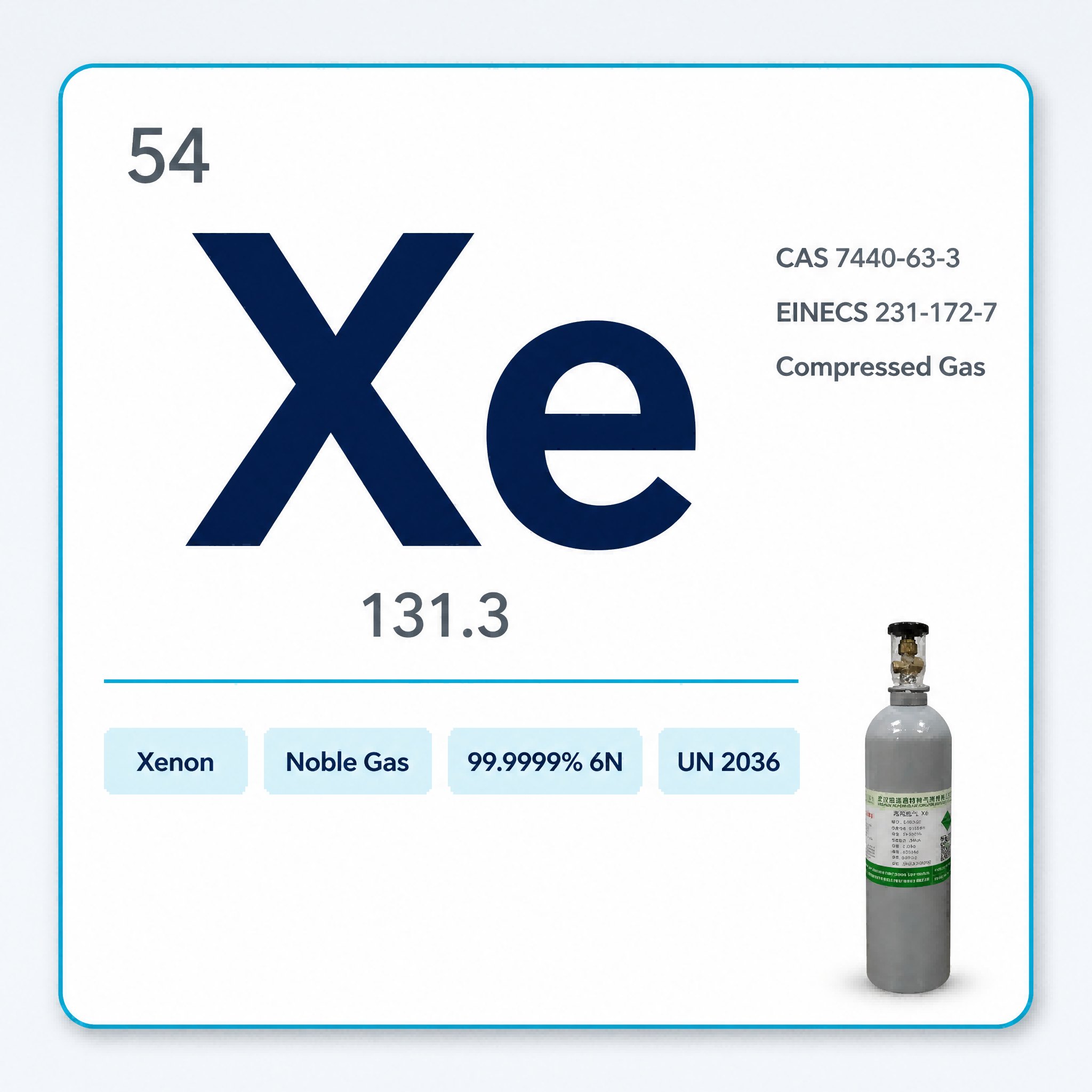
Xenon Gas Price in 2026: Market Drivers, Price Ranges and...
Global xenon prices in 2026 are projected to stay close to USD 2,650–2,950/kg, according to Expert Market Research (report dated 12 Aug 2026); in the United States, xenon was trading around USD 2,930/kg in March 2025 (IMARC, 2025). The price is high for structural reasons, not speculation: xenon is an extremely scarce by-product of cryogenic air...
View More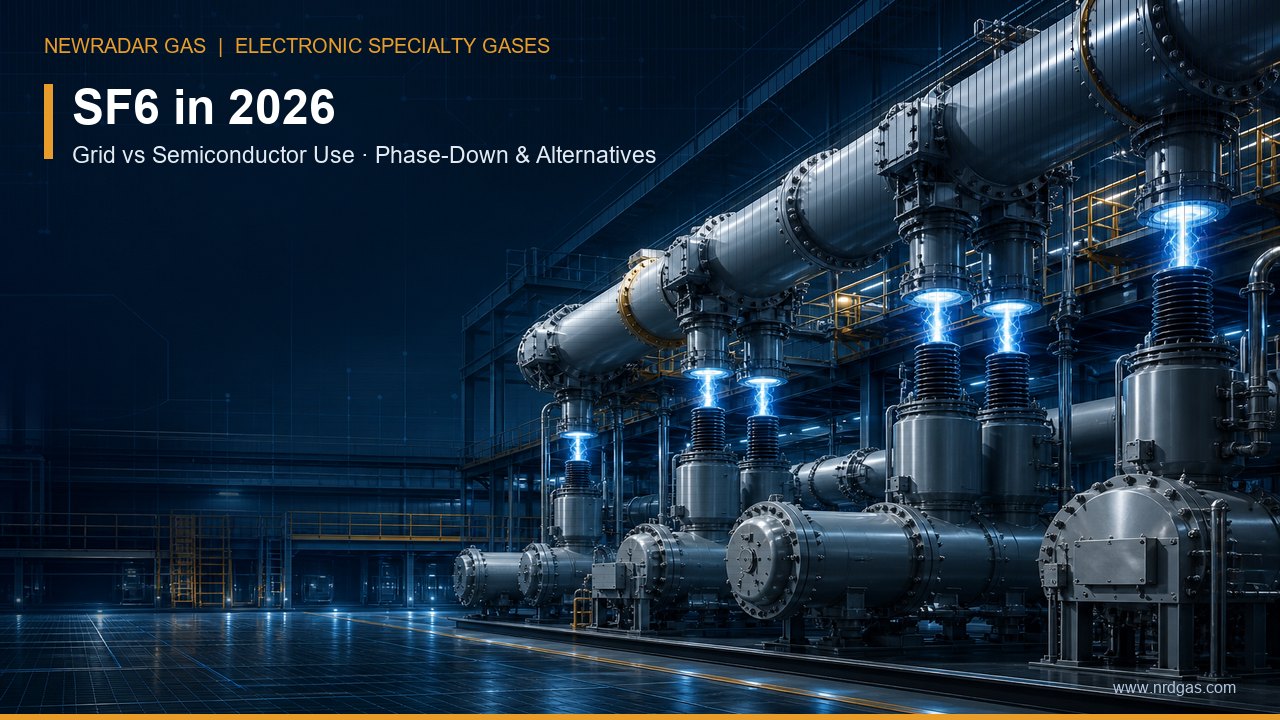
SF6 in 2026: Grid Insulation vs Semiconductor Etching — P...
Sulfur hexafluoride (SF6) enters 2026 as a gas of two industries: electrical equipment, where its dielectric strength and arc-quenching ability make it the established insulation and interruption medium in gas-insulated switchgear (GIS), circuit breakers and transformers; and semiconductor manufacturing, where it is a widely used plasma-etching ...
View More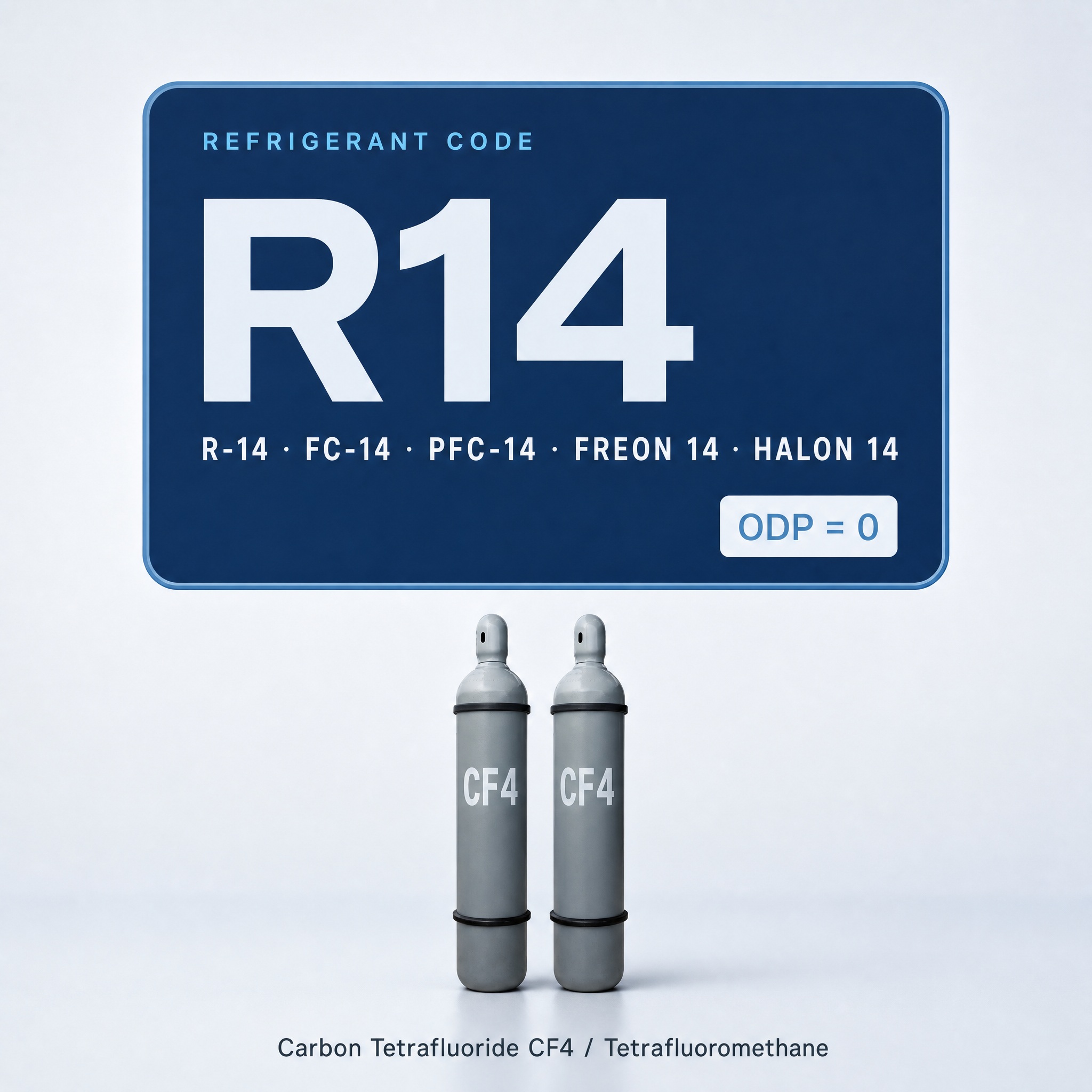
Carbon Tetrafluoride (CF4 / R-14): Semiconductor Etching,...
Carbon tetrafluoride (CF₄, also called R-14) is a colorless, odorless, nonflammable perfluorocarbon gas — CAS 75-73-0, UN1982 — used above all as a semiconductor plasma-etching gas for dielectric and silicon-oxide layers, and additionally as a CVD chamber-cleaning gas, the cryogenic refrigerant R-14, and a niche fire-suppression, gas-shielded we...
View MoreINQUIRY FOR PRICE LIST
For inquiries about our products or pricelist ,please leave your email tous and we will be in touch within 24 hours.
Contact us now